

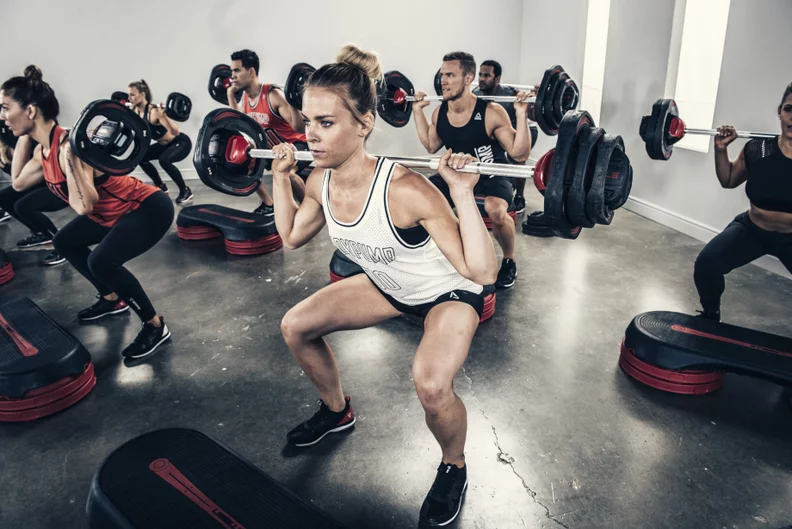
Core strength is often misunderstood. Many people associate it with crunches, planks, or short ab-focused workouts, yet still struggle with back discomfort, poor posture, or lack of stability during everyday movements. For working adults in Singapore, weak core engagement is commonly linked to long hours of sitting, limited movement variety, and training routines that isolate muscles instead of integrating them.
A bodypump class develops functional core strength in a way that traditional abdominal exercises cannot. Instead of focusing on flexing the spine, this training format challenges the core to stabilise the body during loaded, full-body movements. Over time, this creates a stronger, more responsive core that supports posture, balance, and overall strength.
Understanding how core engagement works within this class structure helps unlock its full benefits.
Why core strength is more than visible abs
Visible abdominal definition does not automatically equal functional core strength. The core is a system of muscles that stabilise the spine, pelvis, and ribcage during movement.
This system includes:
-
Deep abdominal muscles that control spinal stability
-
Muscles around the hips that manage pelvic alignment
-
Back muscles that support upright posture
-
Muscles that transfer force between the upper and lower body
When these muscles are weak or poorly coordinated, the body compensates by overusing the lower back, neck, or hip flexors. This often leads to discomfort, inefficient movement, and reduced performance during training.
How a bodypump class trains the core differently
Unlike isolated ab workouts, a bodypump class places the core under continuous demand throughout the session. Every major movement requires stabilisation, even when the core is not the primary focus of the track.
Core engagement happens through:
-
Standing lifts that resist spinal movement
-
Loaded squats that require bracing
-
Lunges that challenge balance and pelvic control
-
Pressing and pulling movements that demand torso stability
This constant engagement trains the core to work automatically rather than only when consciously activated.
Bracing versus bending, the foundation of real core strength
One of the most important skills developed during training is bracing. Bracing involves tightening the muscles around the torso to create internal pressure that supports the spine.
Why bracing matters
Bracing:
-
Protects the spine during load
-
Improves force transfer during lifts
-
Reduces unnecessary spinal movement
-
Enhances balance and coordination
In a bodypump class, bracing is reinforced through repeated cues to engage the core before each lift, squat, or lunge. Over time, this becomes instinctive rather than forced.
Squats and lunges as core training tools
Lower body movements are often overlooked as core exercises, yet they provide some of the strongest core activation when performed correctly.
Squats and spinal control
During squats, the core resists forward collapse and excessive arching. Maintaining an upright torso under load forces the deep abdominal muscles to stay engaged throughout the movement.
Benefits include:
-
Improved lower back stability
-
Better hip and knee alignment
-
Increased awareness of neutral spine positioning
Lunges and pelvic stability
Lunges challenge the core by introducing asymmetrical loading. Each repetition requires the core to stabilise the pelvis and prevent rotation.
This improves:
-
Balance and coordination
-
Hip control during walking and running
-
Lower back support during daily activities
Upper body tracks and rotational control
Upper body movements place different demands on the core, especially when performed standing.
Presses, rows, and clean-style movements require the core to:
-
Prevent excessive arching during overhead work
-
Control rotation during pulling movements
-
Maintain alignment under fatigue
These demands teach the core to stabilise against external forces, which is essential for functional strength.
Why fatigue exposes weak core patterns
Core weakness often becomes visible only when fatigue sets in. As muscles tire, compensations appear.
Common signs include:
-
Excessive lower back arching
-
Rib flare during pressing movements
-
Shifting weight unevenly during lunges
-
Loss of balance during transitions
A bodypump class uses extended work periods that reveal these patterns, allowing participants to correct them through lighter loads and better control.
Load selection and its impact on core engagement
Using excessive weight can overpower the core, leading to compensation and reduced effectiveness. On the other hand, loads that are too light may not challenge stabilisation enough.
Effective core training depends on:
-
Choosing a weight that allows control through full ranges
-
Maintaining posture even in later repetitions
-
Adjusting load when form deteriorates
Prioritising control over load ensures the core receives consistent stimulus without unnecessary strain.
Breathing and core connection
Breathing plays a major role in core stability. Holding the breath or breathing shallowly reduces the core’s ability to support the spine.
Proper breathing during class involves:
-
Exhaling during exertion
-
Maintaining ribcage control
-
Avoiding breath-holding during fatigue
This improves endurance and reduces unnecessary tension in the neck and shoulders.
Carryover to daily life and other training
Functional core strength developed in class translates directly to daily movement.
Participants often notice:
-
Better posture during long workdays
-
Reduced lower back fatigue
-
Improved balance when walking or climbing stairs
-
Greater confidence during other workouts
These improvements occur because the core learns to stabilise automatically rather than only during specific exercises.
Training in a structured environment such as True Fitness Singapore helps reinforce proper technique through consistent cueing and professional instruction, making core engagement safer and more effective over time.
How often to train for core strength results
Two to three sessions per week are generally sufficient for noticeable improvements. Because the core is engaged throughout the class, additional ab-specific sessions are often unnecessary.
A balanced approach includes:
-
Regular resistance-based classes
-
Light mobility or stretching on rest days
-
Occasional posture check-ins during work hours
This supports recovery while maintaining progress.
Avoiding common core training mistakes
To maximise results, avoid:
-
Rushing repetitions at the expense of control
-
Ignoring core cues during upper body tracks
-
Using mirrors excessively and craning the neck
-
Training through pain instead of adjusting load
Consistency and awareness are more important than intensity.
FAQ
Do I still need ab exercises if I attend these classes?
Most people find that core strength improves without additional ab workouts. However, light supplementary work can be added if desired.
Why does my lower back feel tired after class?
This usually indicates insufficient core engagement or excessive load. Reducing weight and focusing on bracing often resolves the issue.
Can this help prevent back pain?
Improved core stability often reduces strain on the lower back, but anyone with ongoing pain should seek professional advice before training.
How long before core strength improves?
Many people notice better stability within three to four weeks, with more visible improvements after eight weeks of consistent training.
Is this suitable for beginners to resistance training?
Yes, as long as loads are kept manageable and technique is prioritised over intensity.